Channel Partner Blog
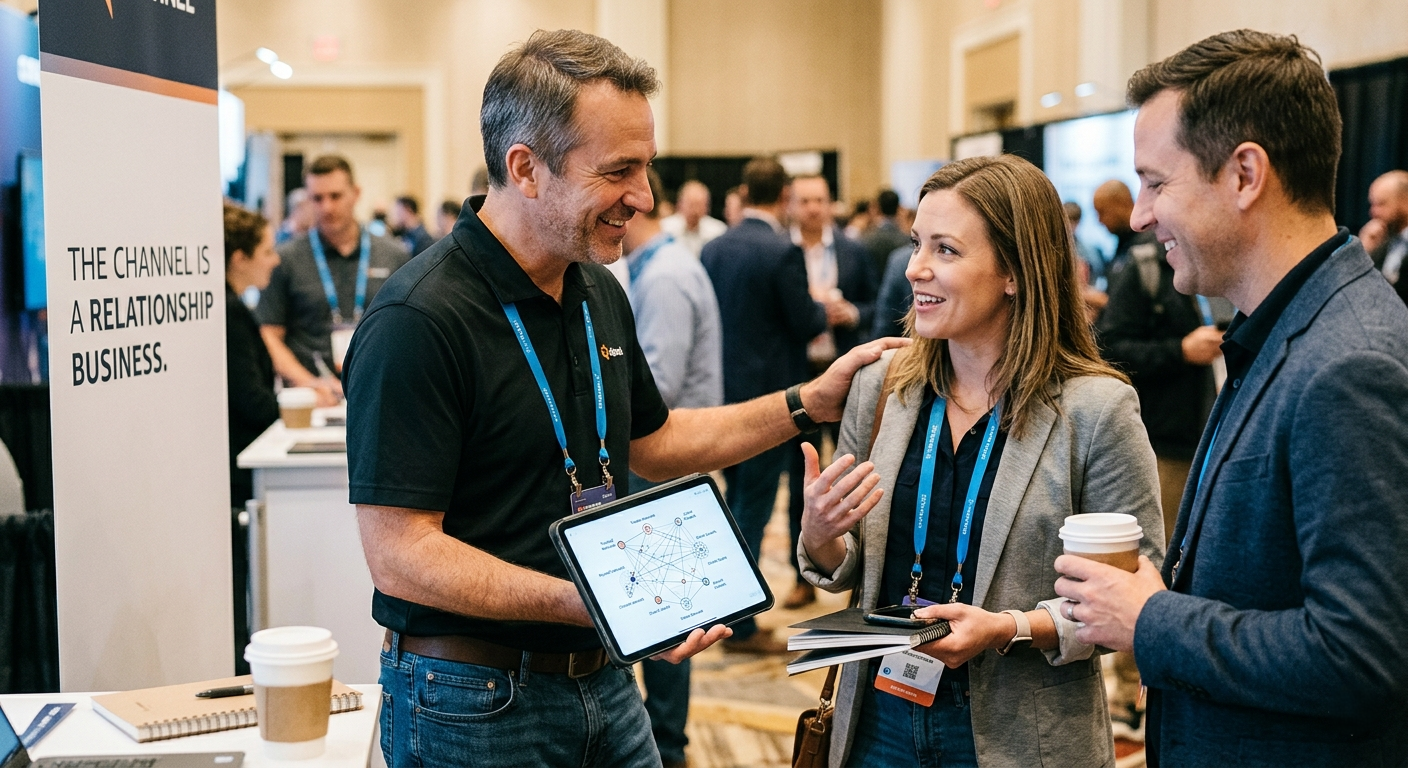
At some point, our industry began to describe the channel in the language of logistics. We speak of resellers, distribution and fulfilment, and in doing so we reduce the partner to a conduit — a pipe through which product travels on its way to a customer. The model that follows is a familiar one: recruit partners in volume, set the right pricing, and wait for revenue to follow. It is an efficient story to tell, and a comfortable one to measure. It is also, in my experience, the principal reason so many channel programmes fail to deliver on their promise.
Having spent a number of years building partner ecosystems across the African market, I have become convinced that the transactional view of the channel is fundamentally mistaken. The channel is not a reseller business. It is a relationship business. The partners who endure, and the distributors who succeed alongside them, are those who understand that distinction and organise their entire approach around it.
The appeal of transactional thinking is that it lends itself so readily to measurement. One can count signed agreements. One can place a growing number of partners on a slide and present it as evidence of momentum. Yet a signature is not a relationship, and a logo on a roster is not revenue. I have seen programmes that boasted hundreds of active partners, only a small fraction of whom were selling anything at all. The remainder had signed an agreement, attended an introductory session, and then quietly disengaged. On paper, the channel appeared substantial. In practice, a handful of committed partners were carrying the entire enterprise.
This is the predictable consequence of optimising for the transaction. It produces a great many beginnings and very few sustained relationships. Recruitment becomes a measure of activity rather than outcome, disconnected from the question that actually matters: whether a partner can build a durable business on the foundation a distributor has provided. The transaction, properly understood, is the result of a healthy partnership. It is never its starting point, and any programme that treats it as such is building on sand.
The role of trust
There is a lesson that every experienced channel professional eventually learns. Partners do not, in the end, choose a distributor on the basis of price. Competitive pricing earns a place on the shortlist; trust wins the business and, more importantly, retains it over time.
It is worth pausing to consider what a partner is genuinely being asked to do. Each time they recommend a solution, they place their own name, their own client relationships and their own reputation at risk. If something goes wrong, it is the partner who receives the difficult call and manages the consequences. The distributor remains one step removed; the partner is the one accountable to the customer. When a partner chooses to lead with a particular vendor, then, they are not simply purchasing a product. They are extending that distributor their credibility — and credibility of that kind is earned slowly, through consistent responsiveness, through candour when something is not yet ready, and through a willingness to engage when there is a problem to solve rather than only when there is a sale to close.
I have watched partners remain loyal through pricing changes, product difficulties and sustained competitive pressure, not because any commercial calculation compelled them to, but because they trusted that we would stand behind them. I have also seen partners decline objectively superior terms because the trust required to act on them was absent. Trust is the most undervalued asset in the entire channel, precisely because it never appears on a pricelist and resists easy quantification.
Enablement and the long view
If trust is the currency of the channel, enablement is the means by which it is earned, and it is here that many programmes fall short. Signing a partner is a straightforward matter. Making that partner successful is an altogether different and more demanding commitment, and the distance between the two is where well-intentioned programmes so often founder. A partner who has been signed but never genuinely enabled is not, in any meaningful sense, a partner at all. They are a dormant record in a system, gradually forgetting that the relationship exists.
Meaningful enablement treats a partner's first ninety days as the most consequential period of the entire relationship. It means helping them to secure their first deal rather than providing a portal login and offering good wishes. It means investing in their people, their pipeline and their confidence, frequently in advance of any return that would justify the expenditure on a spreadsheet. That investment is the relationship made tangible. When a distributor helps a partner to win business they could not have won alone, it ceases to be a mere supplier and becomes part of how that partner grows. Partners do not abandon those who have made them successful; they build their futures around them. The strongest partners, in my experience, are not discovered. They are developed, through patience, enablement and a sincere interest in their business rather than merely in one's own share of it.
This is why the relationship model demands a longer time horizon than the transactional one can accommodate. A transactional channel is built for the present quarter; a relationship channel is built for the coming decade. When one treats the channel as a relationship business, the calculus changes entirely. One declines the immediate win that would compromise the lasting one. One accepts a cost today in view of what it will be worth over several years. One does not overreact to a slow quarter from a partner who is demonstrably building something of substance. And the benefits compound in ways the transactional approach can never replicate. The partner enabled three years ago becomes today's most persuasive advocate. The trust established in one market opens doors in the next, because partners speak candidly to one another, and word travels quickly about which distributors genuinely support their people and which merely sign them and move on. Reputation in the channel is the slowest of assets to build and the fastest to spread.
This conviction has only deepened as our industry crosses into the age of the Frontier Firm. Artificial intelligence is reshaping how opportunities are sourced, how pipeline is developed and how work itself is performed, and the gap between partners who harness it and those who do not will widen quickly. It is precisely here that the meaning of distribution is being rewritten. To be a Frontier Distributor is not to move product across a frontier of price and availability, but to carry partners across a frontier of capability — to bring them into the AI era equipped, confident and competitive. That is not a transactional act. One cannot ship a partner into the future on a pricelist. It demands exactly what a relationship business has always demanded: trust, sustained enablement and a willingness to invest ahead of the return. Automation can render a relationship more efficient; it cannot create one. Behind every partnership that succeeds there remains a human decision to trust, to commit and to build together.
The channel, in other words, is not a logistics problem to be optimised. It is a community to be cultivated, and the distributors who appreciate this distinction will build ecosystems that endure long after the others have exhausted themselves replenishing a leaking funnel. To earn the title of Frontier Distributor of choice is to be chosen, again and again, by partners who could go elsewhere — and that is a standing no pricing strategy can buy.
The question I would put to anyone building or operating a channel is therefore a simple one. Are you counting signatures, or are you building relationships? If you are recruiting partners, consider not how many you can sign but how many you can genuinely make successful. If you are a partner deciding where to place your allegiance, look beyond the pricing to the people, for they are the ones you will call when it matters. And if you are designing a programme, design it for the decade rather than the demonstration. The channel rewards those who take the long view. It always has.
If you are a partner seeking to build something of lasting value — to cross into the Frontier era with a distributor invested in your success rather than simply to sign another agreement — I would welcome the conversation channel@4sight.cloud, and let us begin a relationship worth investing in.
